Does a 15% Rise in GST Collections Signal 15% Economic Growth?
Why GST Revenue Growth Can't Be Used as a Simple Proxy for India's Economic Health
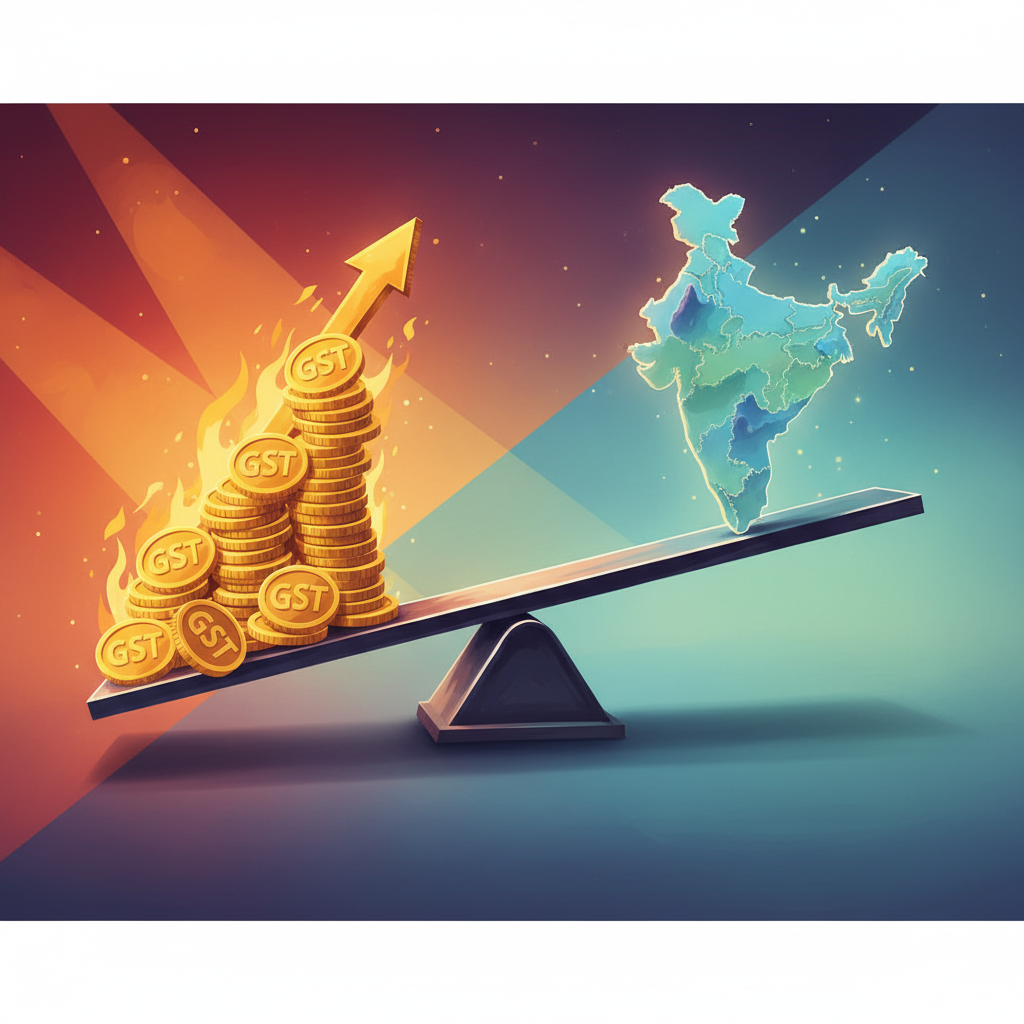
Understanding GST Collection as an Economic Indicator
The Goods and Services Tax (GST) is India's unified indirect tax levied at almost every stage of the supply chain, with credit available to the parties in the chain of value addition. GST is collected at the point of sale, meaning it provides a near-real-time measure of the volume and value of taxable transactions occurring in the economy. Naturally, significant changes in GST collections tend to attract attention from policymakers, analysts, and businesses.
What Drives Increases in GST Collection?
When GST collections rise by 15%, it's tempting to equate this with a 15% increase in economic activity. However, this is a misleading assumption. Several factors can influence GST collection, including:
| Factor | Description |
|---|---|
| Increased Consumption | Higher consumer or business spending leads to more taxable transactions, increasing GST revenue. |
| Improved Compliance | Better enforcement and digitalization reduce tax evasion, increasing collections even at existing activity levels. |
| Formalization | When more of the economy moves from informal (untaxed) to formal (taxed), GST revenues naturally increase. |
| Enhanced Tax Administration | Streamlined administration, technology upgrades, and audits result in higher receipts. |
| Inflation | As prices rise, the GST collected on goods and services also increases, even if the quantity sold remains the same. |
Therefore, while rising GST collections are a positive sign, pinpointing what the increase truly represents requires deeper analysis.
Why GST Growth ≠ GDP Growth
- Not All Growth Is Real: If GST collections rise by 15% but inflation is 7%, then only part of the rise is due to increased real economic activity; the rest simply reflects higher prices, not more goods or services sold.
- Multiple Causative Factors: Improved compliance measures (such as tighter audits or e-invoicing) might boost collections, but this doesn't necessarily mean the underlying economy is growing at the same pace.
- Tax Base Effects: Widening the tax net to include more businesses and transactions can generate spikes in GST collection that are more about formalization than about true expansion of productive capacity.
What Else Should Be Examined for True Economic Growth?
To gauge the overall health of the economy, analysts and policymakers examine a broader set of indicators alongside GST collections:
- GDP Growth: Measures the total value of goods and services produced in the economy.
- Private Consumption: Indicates demand patterns among consumers.
- Industrial Output: Tracks manufacturing and industrial performance, a key employment generator.
- Corporate Sales: Reflects the growth and health of Indian businesses.
- Employment Data: Gauges the labor market's ability to absorb workers.
- Inflation Rates: Helps disentangle how much of the revenue rise is due to price increases versus real output.
Worked Example: GST Growth vs. Economic Growth
Suppose:
- Last year, monthly GST collection = ₹1,00,000 crore
- This year, same month GST collection = ₹1,15,000 crore (15% increase)
- However, inflation over the year = 7%
Real growth in GST collections = 15% (total increase) – 7% (inflation) = 8%.
Still, part of this 8% could be due to compliance improvement, not actual increase in sales or production. Only by reviewing GDP, employment, and other indicators can the true economic picture be drawn.
Practical Implications
- Businesses: Should not conflate a boom in their own GST outgo or collections with market-wide growth; it could be due to regulatory changes or compliance drives.
- Policymakers & Analysts: Should use GST data as a timely input, but always cross-verify with broader, inflation-adjusted metrics.
- Taxpayers: Might face increased scrutiny if authorities interpret high revenue growth as success in anti-evasion strategies.
Conclusion
A sharp uptick in GST collection is encouraging for fiscal health, tax compliance, and administrative efficiency, but does not on its own indicate proportional economic growth. For a true picture, GST collection must be evaluated in context with other key macroeconomic measures.
Frequently asked questions
Does a 15% rise in GST collections indicate 15% economic growth?
No, a 15% increase in GST revenue can be influenced by factors such as better tax compliance, formalization, and inflation, and does not directly translate to the same rate of economic growth.
What factors drive increases in GST collections?
GST collections rise due to higher spending, expanded tax base, improved compliance, better tax administration, and inflation, rather than just real growth in economic activity.
Can inflation alone increase GST collections?
Yes, higher prices due to inflation lead to higher GST receipts even if the volume of goods and services sold remains unchanged.
What other metrics should be checked for actual economic growth?
Macroeconomic health is best judged using GDP growth, consumer spending data, industrial output, corporate sales, employment figures, and inflation.
Is GST data still valuable for policymakers and analysts?
Yes, GST provides a near real-time pulse of the taxpaying economy, but should be interpreted along with other economic indicators for accurate insights.