Planning a ₹2 Lakh Foreign Holiday? Why Your Actual Costs Could Balloon by 25–40%
Food, card fees, TCS, insurance and other hidden expenses that Indian travellers often miss in their international trip budget
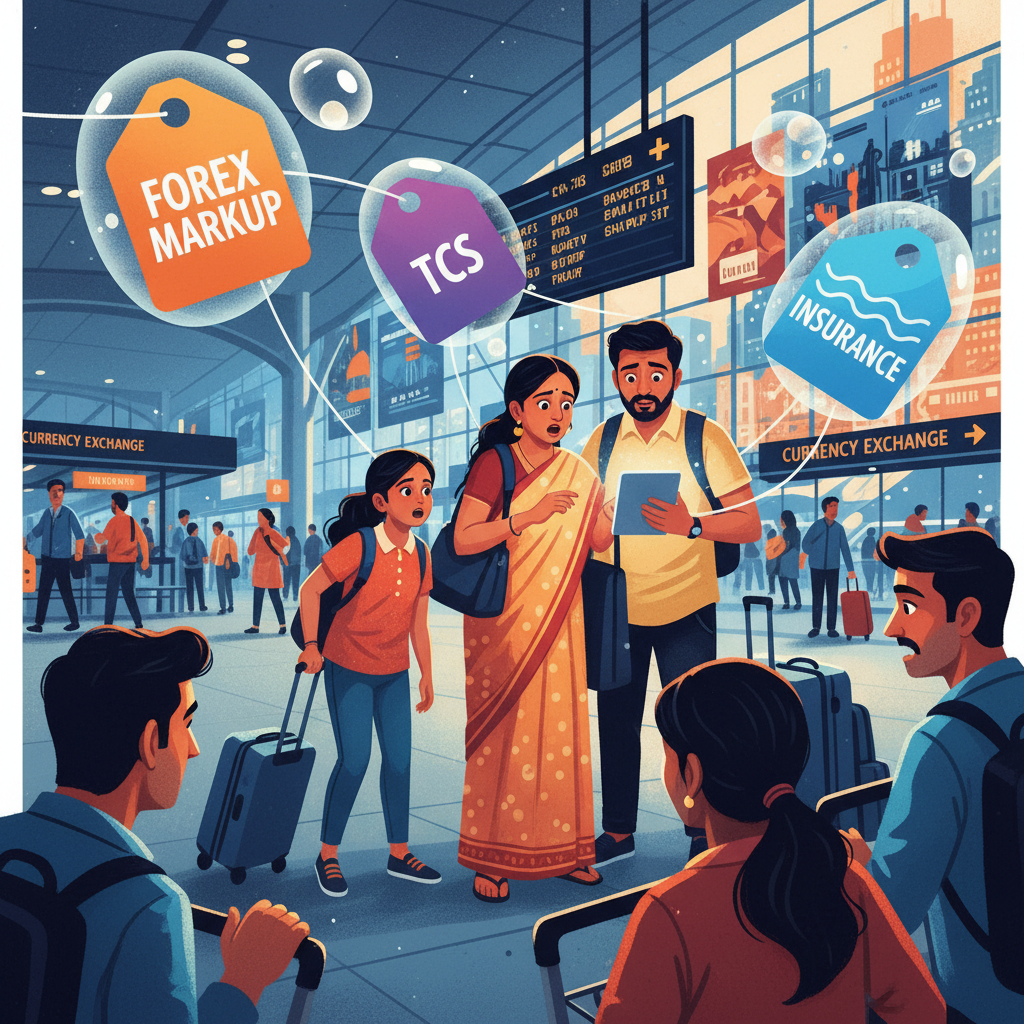
Why Foreign Travel Costs So Much More Than Advertised
Many Indian travellers plan an international vacation with a clear ticket or tour package estimate—often around ₹2 lakh for a typical one-week trip to popular destinations. Yet, by the time the journey is over, the final spend routinely ends up 25–40% above initial estimates. This jump is rarely due to extravagance; it’s the effect of a dozen hidden or underappreciated costs built into even the most careful itinerary.
The Real Triggers Behind that Higher Spend
1. The Hidden Layers in “All-Inclusive” Tour Packages
- Food seldom included: Most tour costs exclude meals, which in Europe could add ₹15,000–25,000 per person for just 2–3 days of dining out.
- Sightseeing, activities, transport: Entry fees, excursions, taxis and local travel are generally extra.
- Add-ons: Tipping, local tourist taxes, and insurance (often compulsory for Schengen visa, for example) are not part of the sticker price.
- Visa & documentation: Government fees plus agent or processing charges are payable upfront and can run into thousands.
2. Airfare: More Than the Ticket Price
While you may have locked in a fare, the final amount often swells due to:
- Seat selection, extra baggage, and meal charges.
- Taxes, surcharges, and airport fees.
- Currency fluctuations, which can alter the rupee equivalent if fares are charged in a foreign currency.
3. Paying Abroad: Card Markups, Dynamic Conversion and ATM Charges
When paying overseas with an Indian-issued credit card (or debit card), the following costs apply:
- FX Markup (typically 3.5% of spend): On a ₹2 lakh trip spend, that’s ₹7,000 extra.
- GST on Markup (18%): A further ₹1,260 (₹7,000 × 18%).
- Total: ₹8,260 for every ₹2 lakh charged.
Foreign Use Scenarios:
- Dynamic currency conversion (DCC): Opting to pay in INR rather than local currency at point-of-sale terminals or ATMs often results in worse exchange rates plus an additional markup on top of the card’s own charges. Always choose to pay in the local currency.
- ATM withdrawals: You may face a fixed charge per withdrawal, a % of amount, and ATM operator surcharges, all further loaded by GST.
- Zero-forex markup cards and forex cards: While these can reduce or waive the standard markup, they have their own eligibility rules, possible load/unload fees, and currency-specific conditions.
4. Tax Collected at Source (TCS) on Overseas Spending
- TCS on tour packages: 2% of total package cost is collected by the tour operator upfront.
- TCS on other overseas spends: 20% TCS applies above the specified threshold (usually ₹7 lakh/year via LRS), impacting spends such as hotel bookings made directly, or international transactions on cards not booked as part of a package.
- TCS is an advance tax—you can adjust or claim it as a refund in your tax return, but it raises the cash outflow at the booking stage.
5. Currency Fluctuations
The INR-equivalent of overseas expenses can rise suddenly if the rupee drops between booking and payment (especially relevant for balances due later or for pay-on-arrival hotels/tours).
A Real-World Example: The True Cost of a Europe Tour
| Expense | Package/Advertised | Real Total (Including Hidden Costs) |
|---|---|---|
| Package price | ₹1,97,624 | ₹1,97,624 |
| Food (6 days) | Not included | ₹18,000 |
| Local sightseeing/transport | Not included | ₹10,000 |
| Visa & insurance | Not included | ₹10,000 |
| Credit card forex markup | Not apparent | ₹8,260 |
| TCS (2%) | May or may not | ₹3,952 |
| Other extras/tips/taxes | Not included | ₹5,000 |
| Actual Outgo | ₹1,97,624 | ₹2,46,576 |
This works out to roughly a 25% increase over the headline package cost—and that’s with fairly conservative local spending assumptions.
What Should Travellers Actually Budget For?
- Expect the total outlay to be 25–40% higher than the headline trip or flight figure, especially if using cards or booking components separately.
- Account separately for: hotel extras, food, sightseeing, all transport, visa/insurance, card/ATM fees, and TCS.
- Keep a 10–15% buffer for truly unexpected costs—such as emergency purchases, surcharges, weather-related disruptions, or medical needs.
Practical Ways to Control Surprises
- Read package fine print: Demand a transparent breakdown; don’t assume basic costs (food, local tours) are included.
- Avoid DCC: Always choose to pay in the local currency abroad (on both card machines and ATMs).
- Research zero-forex cards: If you qualify, they can save significant sums—just ensure you understand all terms and possible other fees.
- Prepay big-ticket items: Wherever possible, lock in rupee costs in advance (like for major hotels/tours booked in India) to sidestep currency risk.
- Track TCS on all foreign bookings: If TCS is collected, keep every receipt—this is needed for tax credits or refunds later.
- Set SMS alerts for card transactions: To catch double charging, DCC, or surprise fees during your trip.
Unresolved and Special Points
- TCS applicability thresholds: Not all spending triggers TCS—most personal card use overseas only faces 20% TCS above the ₹7 lakh/year threshold, while package bookings get a flat 2% TCS.
- Zero-forex and forex card rules vary: Check for minimum spend, reloading charges, or restrictions per country/currency.
- Local tourist taxes: Some destinations (France, Italy, Japan) levy per-night hotel taxes payable only on arrival—these are not pre-included by agents or booking sites.
What to Do Next
- Build a detailed list of anticipated and possible unplanned costs before booking your trip.
- Clarify with your agent/operator which charges are and aren’t included, and get all fee details for your cards.
- Save all travel receipts and statements for both personal review and to claim TCS credit or a refund while filing your tax return.
Foreign travel can be an amazing experience—but only if the reality matches your expectations (and your credit card bill).
Frequently asked questions
Are meals included in standard foreign holiday packages from India?
Most packages from Indian operators include only breakfast or no meals; lunches, dinners and snacks are typically extra and can significantly raise total spend.
How much does the credit card forex markup cost for a ₹2 lakh overseas spend?
A typical 3.5% markup plus 18% GST adds over ₹8,200 to the bill when spending ₹2 lakh abroad via Indian-issued credit cards.
What is TCS and how does it affect my holiday budget?
Tax Collected at Source is charged on tour packages (2%) and some overseas spends (20% above ₹7 lakh/year), increasing the upfront cash outgo, but you can claim the amount back or adjust it against your income tax liability.
Can I avoid extra foreign transaction costs using a different card?
Zero-forex markup cards or pre-paid forex cards can reduce or eliminate markups, but you must check eligibility and potential other fees or restrictions for your route and spending type.
Is it cheaper to pay in rupees or in the local currency when abroad?
Always pay in the local currency—opting for INR via dynamic currency conversion abroad usually results in higher merchant markups and less favourable exchange rates.
What types of travel expenses tend to be missed when budgeting for a foreign trip?
Indians often underestimate or forget to include costs for meals, local transport, sightseeing activities, visa and insurance fees, credit card fees, TCS, and hotel tourist taxes.