Should You Take a Personal Loan to Repay Your Credit Card Debt?
A practical guide to evaluating personal loan debt consolidation for Indian borrowers
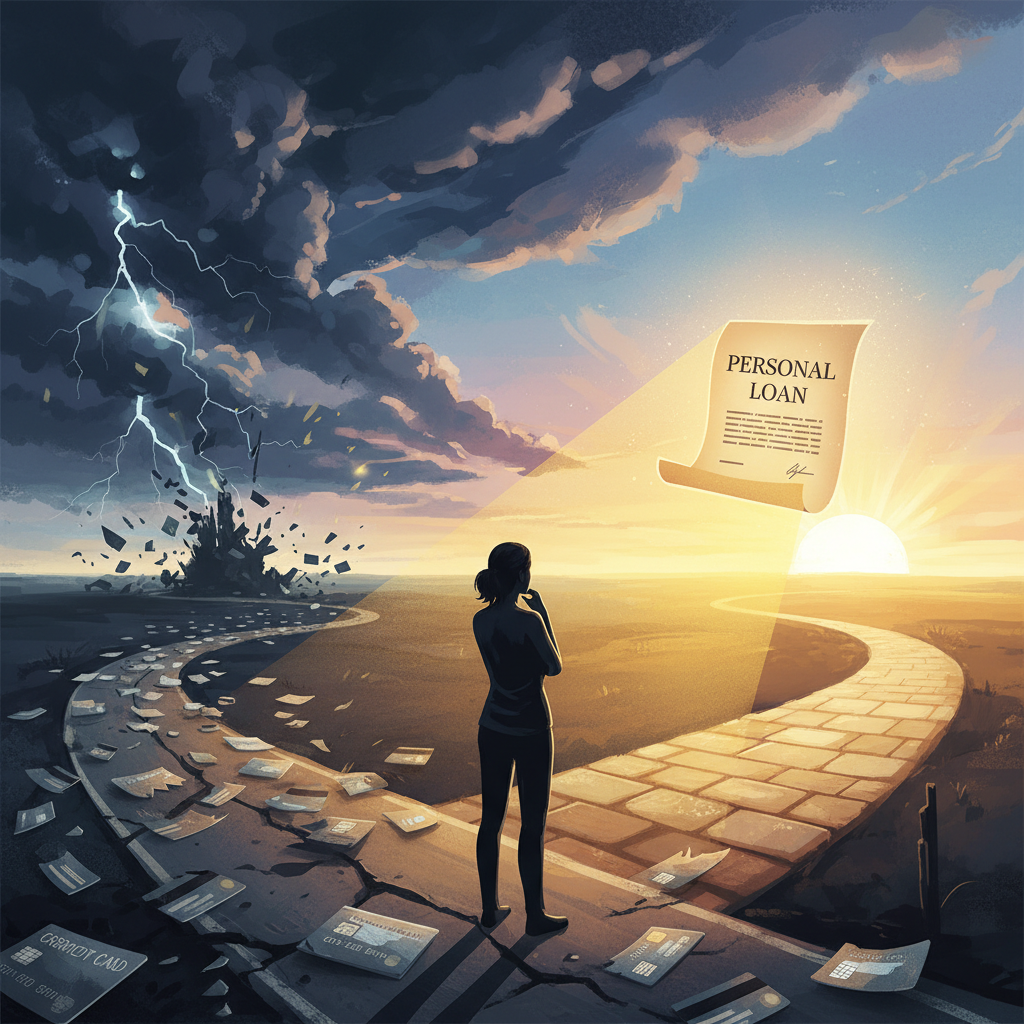
The Dilemma: Paying Off Credit Card Debt
Credit card debt can be among the most expensive forms of borrowing for Indian consumers, with monthly compounding interest rates often crossing 36-48% per annum (APR). If you're struggling with high outstanding balances, rolling over dues month after month, the burden of debt accumulation can quickly spiral out of control.
A common suggestion is to take a personal loan—typically offered at 10-24% p.a.—to pay off your credit card balances and consolidate debt into a single, fixed monthly EMI. But does this approach always make sense? Let’s break down when it works, the checks you must do, and the pitfalls to avoid.
How Debt Consolidation with Personal Loans Works
Debt consolidation means bringing multiple high-cost credit card debts under a single, lower-cost personal loan. By using a personal loan to fully pay off several credit cards, you:
- Stop the cycle of minimum payments and revolving interest.
- Replace multiple payment deadlines with one EMI.
- (Potentially) reduce overall interest cost—provided the new loan's effective rate is much lower.
Key Checks Before You Consolidate Debt
- Interest Rate Comparison
- Credit card APR typically: 36-48% per annum.
- Good personal loan rate: 10-18% (sometimes up to 24%) based on credit score and lender.
- The lower the personal loan interest rate versus your current card APR, the bigger your savings.
- Processing Fees and Prepayment Penalties
- Personal loans carry processing charges (1-3% of loan value).
- Some loans levy penalties if you try to prepay/close the loan early. These can reduce the savings from consolidation.
- Total Interest Outgo
- A lower EMI with a longer tenure can mean you pay more total interest, despite a lower rate. Always compute _total_ cost, not just monthly savings.
- Example:
- ₹3 lakh credit card debt @ 42% APR, repaid over 3 years = approx ₹2.5 lakh total interest.
- ₹3 lakh personal loan @ 15% p.a. over 3 years = approx ₹74,000 interest.
- Assess Repayment Capacity
- Ensure your income can comfortably cover the new EMI—missing personal loan EMIs hurts your credit score and can trigger harsher collection action than missing a card due.
- Your Spending Behaviour
- Debt consolidation is not a cure for overspending habits. If you continue to use your cards and build up fresh dues, a personal loan only postpones the problem.
Practical Pros and Cons Table
| Factor | Credit Card Debt | Personal Loan Consolidation |
|---|---|---|
| Typical Rate | 36-48% APR | 10-24% APR |
| Payment Type | Multiple, flexible | Single, fixed EMI |
| Prepay Cost | None | Sometimes (check terms) |
| Tenure | Open-ended | 1-5 years (fixed) |
| Discipline | Often low | Higher (structured EMI) |
Who Should Consider This? (And Who Shouldn't)
Suitable for:
- Those with multiple cards, large balances, and a stable income.
- Borrowers who can qualify for personal loan offers at significantly lower rates than their existing card debt.
- Individuals capable of sticking to strict repayment discipline after consolidation.
Not suitable for:
- Borrowers with irregular income or poor track record of financial discipline.
- Those likely to continue incurring new card dues after loan disbursal.
- If personal loan interest is not at least 10-15% lower than card APR after including fees and charges.
Smart Steps Before Consolidating
- List all your card dues, interest rates, and minimum payments.
- Check your personal loan eligibility and compare interest rates across banks and NBFCs.
- Use an online EMI calculator to check total repayment amounts and compare with your current card path.
- Factor in all fees and prepayment terms.
- Prepare a strict budget to avoid sliding back into new card debt.
- Consult a certified financial planner if unsure.
Common Mistakes to Avoid
- Taking a personal loan for partial, not full, card repayment—old debt lingers while new debt accumulates.
- Ignoring processing or prepayment fees that eat into your expected savings.
- Using a new personal loan and then continuing with undisciplined card use.
Conclusion
A personal loan can be a valuable debt management tool for those trapped in high-interest credit card debt, but only when the math, discipline, and repayment ability line up. The shortcut: debt consolidation works best as part of a broader plan to control spending and close the debt cycle for good.
Frequently asked questions
Is taking a personal loan always cheaper than keeping credit card debt?
No. It is only cheaper if the personal loan interest rate is significantly lower than your card's annualized interest, after adding processing fees and other charges.
Will consolidating credit card debt with a personal loan improve my CIBIL score?
Timely repayment of the loan and clearing credit cards can improve your credit score over time, but missing new EMIs will damage it further.
What fees should I consider when switching to a personal loan?
Consider processing fees (typically 1-3%), prepayment penalties, and any other upfront or hidden charges before making the switch.
Can I keep using my credit cards after taking a personal loan to clear my dues?
Technically yes, but to avoid falling back into debt, it's recommended to stop or limit credit card usage until the personal loan is fully repaid.
Should I choose the longest possible loan tenure to reduce monthly EMI?
A longer tenure reduces your EMI but increases the total interest you pay. Choose a tenure that balances affordability and total repayment cost.